Drilling machinery

Rigs matched to the ground, the hole and the site.

We work from your hole diameter, target depth, rock conditions and site access to recommend the right rig class, then supply the machine, tooling and spare parts to keep it running.

Rig classes

Eight rig classes, from basements to open pits.

Each example shows a typical configuration. Specifications are typical ranges for the class; we confirm exact figures for the machine you choose.

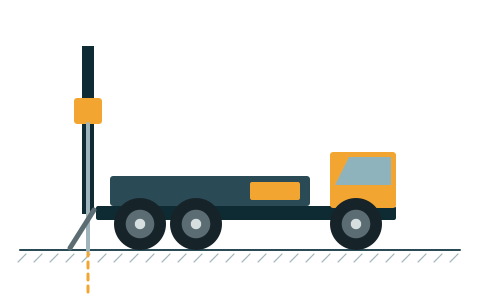
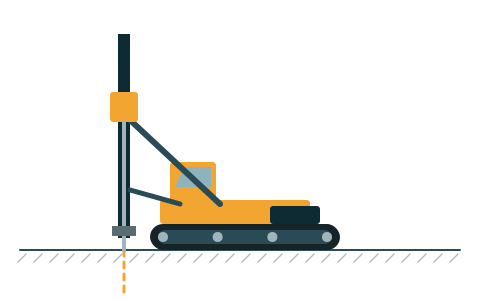
Illustration: compact crawler foundation rig

Foundation & ground engineering

Compact crawler foundation rig

A compact, stable rig for micropiles, ground anchors, tie-backs, jet grouting and drainage holes on tight construction sites.

Operating weight
6–14 t
Hole diameter
90–300 mm
Drilling depth
up to 60 m
  • Micropiles
  • Anchors
  • Jet grouting
  • Drainage
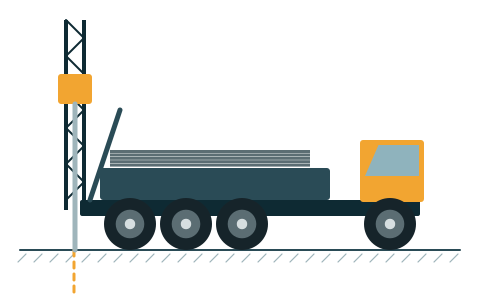
Illustration: truck-mounted geotechnical rig

Geotechnical & environmental

Truck-mounted geotechnical rig

A mobile rig for soil investigation, sampling, in-situ testing and environmental monitoring wells, moved quickly between boreholes.

Rotary torque
3–8 kNm
Hole diameter
76–200 mm
Drilling depth
up to 100 m
  • Soil sampling
  • SPT / CPT
  • Monitoring wells
Illustration: truck-mounted water well rig

Water wells & geothermal

Truck-mounted water well rig

A high-pullback rotary and down-the-hole rig for water supply boreholes, irrigation wells and ground-source heat installations.

Pullback
15–40 t
Hole diameter
up to 600 mm
Drilling depth
300–800 m
  • Mud rotary
  • DTH
  • Geothermal loops
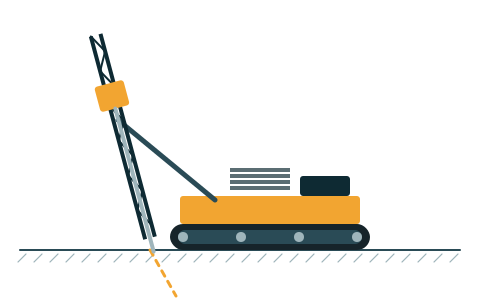
Illustration: crawler core drilling rig

Mineral exploration

Crawler core drilling rig

A core and reverse-circulation rig for resource definition and grade control, drilling vertical or angled holes.

Depth (NQ core)
800–2,000 m
Drilling angle
45–90°
Operating weight
8–18 t
  • Diamond core
  • RC drilling
  • Grade control
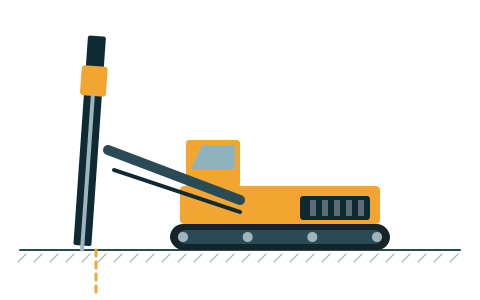
Illustration: surface crawler dth rig

Open pit & quarry

Surface crawler DTH rig

A crawler rig with an on-board compressor and cab for production blast-hole drilling in quarries and open-pit mines.

Hole diameter
90–165 mm
Drilling depth
up to 30 m
Air pressure
17–25 bar
  • Blast holes
  • Open pit
  • Quarrying
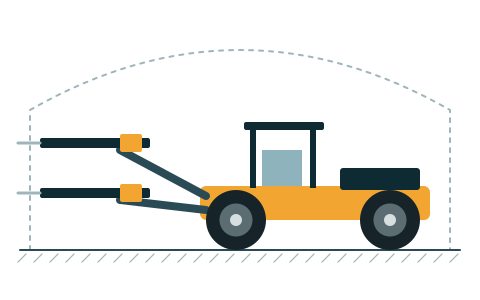
Illustration: two-boom face drilling jumbo

Underground

Two-boom face drilling jumbo

A wheeled jumbo for drilling blast-hole patterns at the tunnel face in development headings and civil tunnels.

Face coverage
up to 100 m²
Hole diameter
43–64 mm
Booms
1–3
  • Tunnelling
  • Development
  • Rock bolting
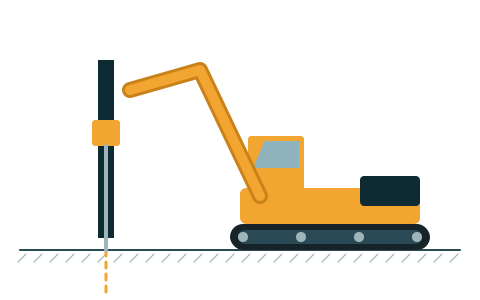
Illustration: excavator drilling mast

Attachments

Excavator drilling mast

A complete articulated drilling attachment that turns an existing excavator into a capable rig for slopes and remote sites.

Carrier
14–35 t excavator
Hole diameter
64–152 mm
Drilling depth
up to 25 m
  • Slope works
  • Remote sites
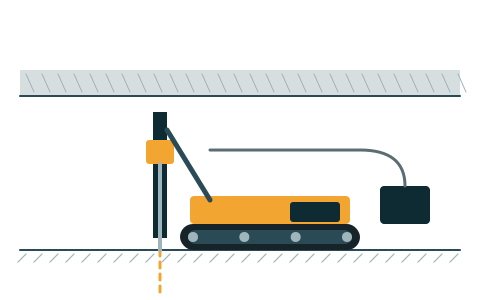
Illustration: low-headroom basement rig

Special application

Low-headroom basement rig

A narrow, low-height rig with a remote power pack for basements, building retrofits and other limited-access work.

Working height
from 2.2 m
Hole diameter
90–250 mm
Track width
from 0.8 m
  • Low headroom
  • Indoor work
  • Retrofits
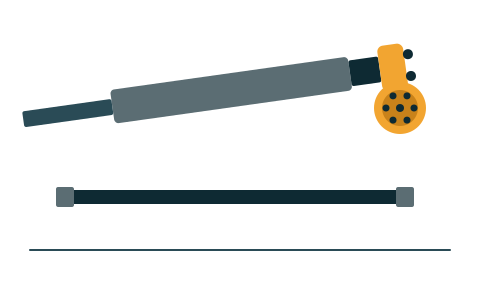
Illustration: DTH hammer, drill rod and button bit

Tooling & spare parts

Keep the rigs you already run drilling.

DTH hammers and button bits, drill rods and casing, rotary heads, hydraulic components and wear parts, sourced for your rig and ground conditions.

  • DTH hammers and bits from 3" to 8"
  • Drill rods, casing and adapters
  • Rotary heads, hydraulic pumps and motors
  • Wear parts and service kits

Choosing a rig

What we ask before we recommend a rig.

  1. Hole diameterSets the hammer or bit size and the power the rig needs.
  2. Target depthDecides pullback, rod handling and compressor capacity.
  3. Ground conditionsSoil, weathered rock or hard rock decide rotary, DTH or top-hammer drilling.
  4. Site accessHeadroom, slope and transport limits decide the carrier and size.

Planning a drilling project?

Send us your hole diameter, depth and ground conditions and we will recommend a rig.

Request a quote